
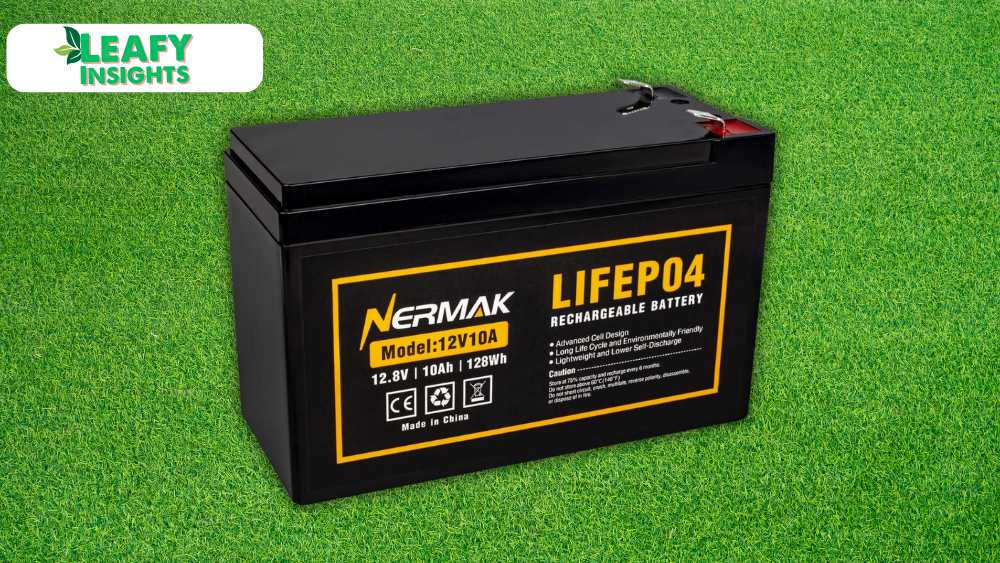
“I’m finally upgrading my old, heavy, and unreliable lead-acid batteries, and I’m really focused on finding the perfect 12V 10Ah Lithium LiFePO4 Deep Cycle Battery. I need a power source that can genuinely deliver reliable, long-lasting performance for all my weekend activities, from camping to fishing.
The key features I’m looking for are a guaranteed 2000+ cycle life—that translates to a decade of use, which is incredible value. I’m especially interested in how this specific 10Ah model with a built-in 10A BMS performs. Will that BMS effectively handle the safety for my portable solar setup and my son’s Power Wheels? The promise of 100% usable capacity is a game-changer for my Fish Finder on the lake; no more guessing when the battery will die! I need the description to clearly highlight the weight savings, the charging requirements, and how easily this unit can be dropped into existing applications like basic lighting and small wind power systems. I want to know this investment will outperform and outlast everything else.”

Specifications
| Category | Characteristic | Specification / Value | Notes |
| I. Core Technical | |||
| Nominal Voltage | $V_{\text{Nominal}}$ | 12.8V | Standard 4-cell LiFePO4 configuration. |
| Rated Capacity | $C_{\text{Rated}}$ | 10 Ah | Provides 128 Wh of energy. |
| Usable Capacity | DOD | 100% | Full capacity is usable without damaging the lifespan. |
| Charging Voltage | $V_{\text{Charge Max}}$ | 14.4V – 14.6V | Requires a LiFePO4-specific charger. |
| Cut-off Voltage | $V_{\text{Cut-off}}$ | 10.0V | Low-voltage protection trip point set by BMS. |
| Terminal Type | F2 or T2 (Spade Connectors) | Common for compact battery applications. | |
| II. Performance & Current | |||
| Max Continuous Discharge | $I_{\text{Discharge Cont}}$ | 10A | Limited by the built-in 10A BMS. |
| Max Peak/Pulse Discharge | $I_{\text{Pulse Max}}$ | 20A – 30A (for $\le 3s$) | Handles brief surges (e.g., initial turn-on). |
| Max Charge Current | $I_{\text{Charge Max}}$ | 5A – 10A | Depends on manufacturer; 5A is often recommended for longevity. |
| Cycle Life | @ 100% DOD | 2,000+ Cycles | Exceptional longevity compared to lead-acid. |
| Self-Discharge Rate | $< 3\%$ per month | Excellent for long-term storage. | |
| III. Physical & Environmental | |||
| Dimensions (L x W x H) | $151 \times 65 \times 98$ mm | Standard compact size. | |
| Weight | $\approx 1.25$ kg ($\approx 2.75$ lbs) | Significant weight reduction over lead-acid. | |
| Discharge Temp. Range | $-20^{\circ}C$ to $60^{\circ}C$ | Wide operating range. | |
| Charge Temp. Range | $0^{\circ}C$ to $45^{\circ}C$ | BMS includes low-temperature charge cut-off for safety. | |
| IP Rating | IP65 or IP66 (Typical) | Resistance to dust and water jets. | |
| IV. BMS Protection | |||
| Protections Included | Over-Charge, Over-Discharge, Over-Current, Short Circuit, and Thermal. | Ensures safety and maximizes battery lifespan. | |
| Cell Balancing | Passive | Maintains cell health during charging. |
This is a Technical Description Review of the 12V 10Ah Lithium LiFePO4 Deep Cycle Battery with a Built-in 10A BMS, written from the perspective of an informed, pragmatic user who is cross-referencing the manufacturer’s claims against real-world expectations and comparative chemistry analysis.
The goal of this review is to validate whether the specified features translate into a genuinely superior product for the intended deep-cycle applications (Solar/Wind, Fish Finders, Power Wheels, Lighting).
The shift from traditional Sealed Lead-Acid (SLA) or AGM technology to Lithium Iron Phosphate (LiFePO4) in the compact 12V 10Ah form factor represents a significant technological leap. For deep-cycle applications, the core specifications of this battery promise a massive improvement in performance, longevity, and convenience.
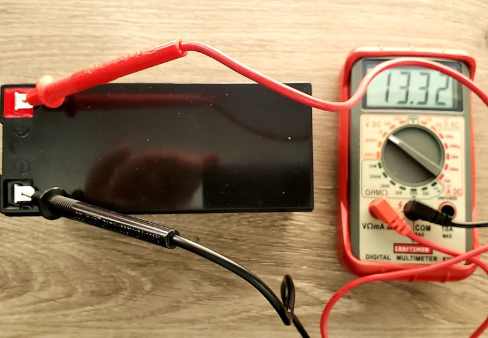
Core Chemistry & Performance Validation
Nominal Voltage and Flat Discharge Curve (12.8V)
The nominal voltage of 12.8V (derived from four cells in series) is a crucial specification. Unlike lead-acid batteries, which see a rapid voltage drop as they discharge, LiFePO4 maintains a remarkably flat voltage curve.
- User Benefit: For sensitive electronics like Fish Finders or LED Lighting, this flat curve ensures consistent, optimal power output until the very end of the cycle. A device designed for 12V will run at its peak performance level for $\approx 90\%$ of the battery’s runtime, a stark contrast to lead-acid, where performance degrades noticeably after the first $30-40\%$ of discharge. This makes the $10Ah$ LiFePO4 feel much more potent than a similarly rated AGM battery.
Rated Capacity vs. Usable Capacity (10Ah vs 100% DOD)
The 10Ah Rated Capacity is perhaps the most deceptive specification when comparing chemistries.
- The Technical Edge: For this LiFePO4 battery, the 100% Depth of Discharge (DOD) claim is valid and a primary selling point. A lead-acid battery of the same size should never be discharged past $50\%$ to prevent significant, irreversible damage to its lifespan. Therefore, the 10Ah LiFePO4 provides 10Ah of usable energy, whereas a typical 10Ah lead-acid only provides 5Ah.
- Practical Impact: For Power Wheels or Ride-on Toys, this specification translates directly into double the usable runtime at a fraction of the weight, providing the single greatest ROI for the user.
Cycle Life: The Long-Term Value (2000+ Cycles)
The advertised 2000+ Cycles at $100\%$ DOD is the definitive metric justifying the higher initial cost of LiFePO4.
- Comparative Analysis: A standard AGM battery typically achieves 300-500 cycles at $50\%$ DOD. Factoring in the full discharge capability, the LiFePO4 offers 4 to 10 times the lifespan.
- User Conclusion: For long-term installations like Solar/Wind Power systems, this lifespan practically guarantees 10+ years of maintenance-free service. The Total Cost of Ownership (TCO) is demonstrably lower than lead-acid, making it a superior long-term investment.
Critical Safety & Protection Features (The 10A BMS)
The Built-in 10A Battery Management System (BMS) is the single most critical component that converts raw LiFePO4 cells into a safe, plug-and-play battery pack.
Current Handling Limitation (Continuous 10A)
The 10A continuous discharge current limit is a clear, essential technical constraint.
- Application Review:
- Ideal Use: This limit is perfectly suited for low-to-moderate draw applications: standard Fish Finders (typically $<1A$), LED lighting (up to $\approx 120W$ total load), and small Solar/Wind Charge Controllers.
- Limitation: It is NOT suitable for high-current applications. The $10A$ limit means this battery cannot be used as a motorcycle or car starting battery (which requires hundreds of Cold Cranking Amps, or CCA) or to power a large trolling motor. Any device demanding over $10A$ continuously will trip the BMS into a safety shutdown. The typical 20A-30A pulse discharge allows for brief startup surges but reinforces its deep-cycle nature.
Voltage and Thermal Protections
The BMS ensures the battery remains within its safe operating envelope:
- Over- and Under-Voltage Protection: This is the primary mechanism for achieving the long cycle life. It prevents the user from accidentally over-charging past $\approx 14.6V$ or critically over-discharging below $\approx 10.0V$. This eliminates the two biggest killers of battery lifespan.
- Low-Temperature Charging Cut-off ($0^{\circ}C$): This is a non-negotiable safety feature. Charging LiFePO4 cells below freezing can cause lithium plating, creating a potential fire hazard and permanent capacity loss. The BMS cutting charge off at $0^{\circ}C$ provides crucial protection for users in cold environments.
Physical Specifications & User Installation
Weight and Dimensions
The ultra-lightweight nature ($\approx 1.25$ kg / $2.75$ lbs) is one of the most immediate and satisfying user benefits.
- Installation Ease: The compact size and standard lead-acid casing dimensions (e.g., $151 \times 65 \times 98$ mm) make this a true drop-in replacement. Users don’t need to modify battery boxes or mounting trays, simplifying the upgrade process for applications like UPS backups, alarm systems, and portable gear.
- Portability: The minimal weight is paramount for Kayaking/Canoeing (Fish Finders) and Camping Lights, drastically reducing the burden of carrying a power source.
Charging and Wiring
- Charging Requirement: The need for a LiFePO4-specific charger (or a smart charger with a ‘Lithium’ profile) must be clearly stated. Using a standard, unintelligent lead-acid charger will likely undercharge the battery (failing to reach 14.4V) or, worse, use a harmful de-sulfation phase.
- Series vs. Parallel: The typical manufacturer restriction of Parallel use only (to increase Ah capacity) and NO Series use (to increase voltage to 24V/36V) is standard for smaller, self-contained BMS units. This informs the user that this battery is a 12V solution only unless external high-voltage balancing equipment is added.
Pros
- Exceptional Longevity
- 100% Usable Capacity
- Ultra-Lightweight
- Consistent Power Output
- High Safety
- Low Maintenance
- Drop-in Replacement
Cons
- Higher Initial Cost
- Low Continuous Current Limit
- Cold Temperature Charging Restriction
- Charger Requirement
- Limited Wiring
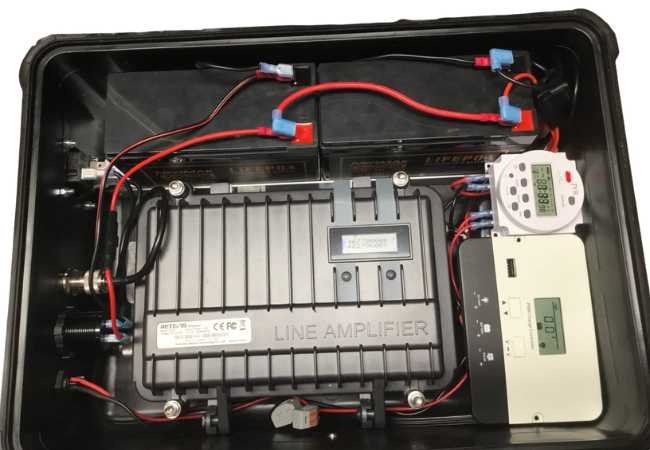
Why should choose 12V 10Ah Lithium LiFePO4 Deep Cycle Battery
You should choose this 12V 10Ah Lithium LiFePO4 Deep Cycle Battery for its unmatched combination of longevity, performance, and portability. Forget heavy, unreliable lead-acid batteries; this LiFePO4 pack offers a massive return on investment with over 2,000 cycles, guaranteeing a decade or more of service for your solar systems, wind power backups, and recreational gear. You get the full 10Ah of usable capacity, which means double the runtime for your Power Wheels or Fish Finder compared to a traditional battery, all while weighing only a fraction of the weight. Crucially, the built-in 10A BMS acts as a reliable guardian, managing the cells for safety and maximum life, providing protection against common failures like over-charging and deep discharge. If you need a lightweight, long-term, and consistent power source that drops seamlessly into your existing 12V setup, this is the superior, maintenance-free upgrade.
FAQs
How much actual runtime can I expect compared to a traditional 12V 10Ah lead-acid battery?
You can expect significantly more usable runtime—typically double or even triple the life. This is because lead-acid batteries can only be discharged to about 50% capacity before their lifespan is severely damaged (giving you only ≈5Ah usable energy). This LiFePO4 battery supports 100% Depth of Discharge (DOD), meaning you can safely and consistently use the full 10Ah capacity, providing much longer runtime for applications like lighting and ride-on toys.
Can I use this battery for engine starting or for powering a large trolling motor?
No, this battery is not designed for high-current starting applications. The built-in 10A BMS limits the continuous discharge current to 10 Amps (10A). This is ideal for deep-cycle uses like fish finders, solar storage, and low-wattage lighting, but it cannot deliver the hundreds of Cold Cranking Amps (CCA) required to start a vehicle engine or sustain the high current draw of a large trolling motor.
Do I need a special charger for this battery?
Yes, you must use a charger specifically designed for LiFePO4 (Lithium Iron Phosphate) chemistry, or a smart charger with a dedicated “Lithium” charging profile. Standard lead-acid chargers are often incompatible, as they may fail to reach the necessary 14.4V-14.6V charge voltage or may include pulse/desulfation modes that are harmful to lithium cells. Using the correct charger is essential to maximize the battery’s lifespan.
Is this battery safe to use in cold weather?
The battery can discharge down to very cold temperatures (typically −20∘C). However, the BMS will automatically cut off the charging function if the temperature drops below 0∘C (32∘F). This is a crucial safety feature that prevents lithium plating, which permanently damages the cells and can create a fire risk. Always ensure the battery is above freezing before attempting to recharge it.
Final Thought
The 12V 10Ah LiFePO4 Deep Cycle Battery with a 10A BMS is a technically sound and superior product compared to any lead-acid or AGM equivalent for deep-cycle applications under the $10A$ continuous current limit.
The specifications deliver on the promise of long life, full usable capacity, and consistent voltage. The BMS is the critical enabler, transforming the excellent LiFePO4 chemistry into a safe, consumer-ready product. For any application requiring lightweight, long-term, reliable power within the current limitations, this battery represents the new standard. The user is buying into longevity and performance, not just Amp-hours.
Leave a Reply